
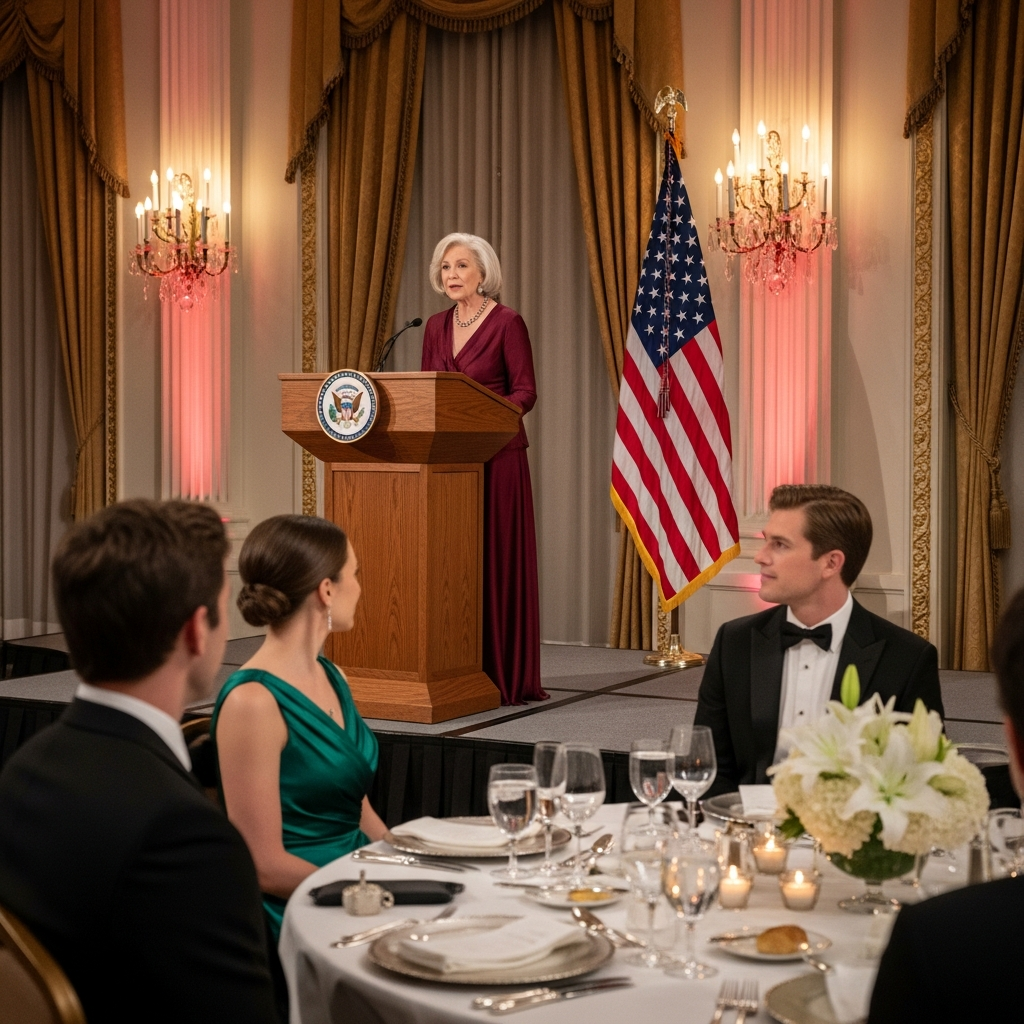
Il hésita – la pause prudente d’un homme empêtré dans des accords de confidentialité et des responsabilités fiduciaires.
« Je ne sais pas dans quelle mesure je peux… »
« Caleb, » l’interrompis-je doucement. « Ils m’ont pris tout ce que j’avais pour créer cette entreprise. Jusqu’au dernier centime de l’assurance-vie de Raymond. Ils m’avaient promis les papiers d’associé. Je ne les ai jamais reçus. »
Son visage se décolora.
« Kora, je n’en avais aucune idée. »
« Bien sûr que non », ai-je répondu. « Je ne l’ai jamais dit à personne. Par fierté maternelle, sans doute. Ou par bêtise. » J’ai gardé une voix calme. « Ce que je veux savoir, c’est s’ils m’ont mentionnée comme investisseuse dans leurs documents. N’importe où. »
Caleb posa sa tasse de café très délicatement.
« À ma connaissance, non », a-t-il fini par dire. « Nous avons mené une analyse approfondie avant d’investir. Leur levée de fonds initiale provenait de fonds personnels et d’un petit groupe d’investisseurs providentiels. Aucun ne s’appelait Green. »
J’ai acquiescé, m’y attendant, mais la confirmation a tout de même été un véritable coup de massue.
« Et la valorisation de leur entreprise maintenant ? » ai-je demandé.
Il expira lentement. « Selon des estimations prudentes, cela représente environ soixante-quinze millions. Ils se préparent à une introduction en bourse l’année prochaine qui pourrait facilement tripler ce montant, surtout si les rumeurs concernant MedTech se confirment. »
Soixante-quinze millions.
Les trois cent cinquante mille dollars que je leur avais donnés — tout mon avenir — vaudraient plusieurs millions aujourd’hui s’ils avaient tenu leur promesse.
« Avez-vous des documents concernant votre investissement ? » demanda Caleb d’une voix douce.
« De simples virements bancaires de mon compte au leur », dis-je. « Et une lettre de Lucas me promettant des parts au même titre que les fondateurs de la société qu’ils étaient en train de créer. Pour ce que ça vaut. » J’essayai de sourire, en vain. « Pas grand-chose dans un tribunal, j’imagine. »
Caleb se pencha en avant, la voix basse. « Kora, si ce que tu me dis est vrai, c’est grave. C’est de la fraude boursière, entre autres. De la tromperie envers les investisseurs. S’ils ont délibérément dissimulé ton financement initial lors des levées de fonds suivantes… »
« Je ne suis pas intéressée par les batailles juridiques », dis-je en l’interrompant. « Je suis trop vieille et trop fatiguée pour ça, et ce sont toujours mes enfants, même s’ils m’ont beaucoup déçue. »
« Alors, que voulez-vous ? » demanda-t-il doucement.
Que voulais-je ?
Accusé de réception. Excuses. Remboursement intégral avec intérêts.
Aucun de ces mots ne semblait suffisant pour exprimer la profondeur de la trahison.
« Je veux aller à cette fête », ai-je finalement dit. « Et je veux que tu sois mon cavalier. »
Caleb parut surpris, puis pensif.
« En tant que votre conseiller financier ? »
« En tant qu’ami », ai-je corrigé. « Un ami qui se trouve être l’un de leurs principaux investisseurs. »
La compréhension s’est éveillée dans ses yeux.
« Kora… » commença-t-il.
« Sois juste là », ai-je dit. « C’est tout ce que je demande. »
He studied me for a long moment, as if seeing me — not as a client, not as his best friend’s widow, but as a woman drawing a line after too many years of swallowing hurt.
At last, he nodded slowly. “Of course. I’ll pick you up at seven.”
The week before the party crawled by. I worked my shifts at the hospital, tended my garden in the early mornings, and prepared with the methodical patience that had served me well through decades of nursing.
I took my old black dress to a tailor in a strip mall near the interstate, where a woman named Mrs. Patel pinned and tucked until it fit my still-slender frame perfectly.
I visited a salon for the first time in years, letting a young stylist with purple streaks in her hair shape my silver bob into something elegant rather than merely practical. When she finished, she spun my chair around and I barely recognized the woman in the mirror — tired around the eyes, yes, but with a certain steel in her posture that hadn’t been there before.
I withdrew a significant portion of my remaining savings for what I needed to do next.
Three days before the event, I visited Anthony Morgan, an old family attorney whose office sat above a pawnshop and a nail salon on a busy street just off Peachtree. Anthony had handled Raymond’s will and the transfer of the house title after his death. He’d always reminded me of a slightly rumpled owl — wise eyes behind smudged glasses, suits that never quite fit at the shoulders.
He listened without interruption as I laid out what I needed, his fingers steepled under his chin. His expression gave nothing away.
“It’s unorthodox,” he said when I finished. “But legal, provided we have the documentation in order.”
“We will,” I assured him. “Can you have it ready by Saturday for Raymond’s wife?”
He smiled faintly at the familiar line Raymond had once used when confronting bureaucrats who tried to push me around. “Of course.” He paused. “Mrs. Green, are you certain this is what you want to do? Family disputes can—”
“This isn’t a dispute, Anthony,” I corrected him gently. “This is a correction. Sometimes the books need balancing, that’s all.”
He nodded, not entirely convinced, but professional enough not to argue. “I’ll have everything prepared. Will you be attending alone?”
“No,” I said. “Caleb Peterson will be accompanying me.”
Anthony’s eyebrows rose, but he said nothing more.
The night of the party arrived with unseasonable warmth for September. Cicadas still hummed in the trees as the sun slid down behind the Atlanta skyline.
Caleb pulled up in front of my house in his charcoal Audi, looking distinguished in a tuxedo that fit him as if it had been tailored yesterday. When I stepped onto the porch in my altered black dress, his eyes widened in unmistakable appreciation.
“Kora,” he said softly. “You look… beautiful.”
“Thank you,” I replied, accepting his outstretched arm. “Let’s not be late.”
The drive downtown was quiet, both of us lost in our thoughts as we passed familiar landmarks — the Kroger where I bought discount produce on Tuesdays, the MARTA station where I’d waited for late trains after night shifts, the hospital complex where I’d spent more of my adult life than in my own living room.
As the Ritz-Carlton came into view, its stone facade lit up against the darkening sky, Caleb finally broke the silence.
“You never told me what happened between you and your children,” he said. “Beyond the investment issue.”
I watched the city lights blur past my window.
“There’s not much to tell,” I said. “They grew up. They moved on. They decided I wasn’t useful anymore… except for my money.” I turned to face him. “It’s a common enough story.”
“Not in my experience,” Caleb said quietly. “Not with a mother like you.”
We pulled up to the valet stand before I could respond. Young men in black vests opened doors, a doorman in a crisp uniform greeted us with practiced warmth. Caleb came around to open my door himself, offering his arm again as we walked into the cool, perfumed air of the hotel lobby.
I felt strangely calm — like the moments before administering a difficult but necessary treatment to a patient. The pain would come, but it would be healing pain.
The ballroom was already crowded when we arrived, filled with men in dark suits and women in cocktail dresses, the air heavy with expensive perfume and the particular laughter of people who believe themselves successful. White tablecloths, glittering glassware, tiny candles floating in bowls of water. A banner bearing the Horizon Innovations logo hung above a small stage at the far end, flanked by two large projection screens.
“Kora.”
Rebecca’s voice, startled and slightly strained, cut through the buzz of conversation.
She approached us, resplendent in a red designer dress that showed off the gym-toned arms she’d once complained she never had time to earn. Her dark hair was swept up in an elegant twist. She air-kissed my cheek, careful not to smudge her gloss, her eyes already sliding past me to Caleb.
“Mr. Peterson,” she said, her voice turning honeyed with ambition. “We didn’t know you were coming with my mother. What a lovely surprise.”
“The pleasure is mine,” Caleb replied smoothly. “Your mother and I have been friends for many years.”
Rebecca’s smile faltered slightly at the emphasis on friends, but she recovered quickly.
“Well, we’re so glad you could both make it,” she said. “Lucas will be thrilled.”
As if summoned, my son appeared at his sister’s side, handsome in his tuxedo, his father’s gray eyes assessing me coolly.
“Mom,” he said, giving me a brief nod. “You clean up nice.”
He turned at once to Caleb, extending his hand.
“Mr. Peterson. Always good to see our most valued investor.”
I watched my children fawn over Caleb, barely acknowledging my presence except to cast the occasional wary glance my way. They were wondering why I had come, why their mother — the nurse from the small house on the edge of the city — was standing in their gleaming world of success. Why I had brought one of their major investors as my date.
“The program will be starting soon,” Rebecca said finally. “We’ve reserved seats for you both near the front.” Her eyes flicked to mine, a faint smirk at the corner of her mouth. “We thought you’d enjoy seeing what real accomplishment looks like.”
There it was again — the phrase from the invitation.
My son’s smirk confirmed he’d been the author.
“I’m looking forward to it,” I replied, my voice even.
Caleb offered me his arm again, and we followed my children through the crowd to a table near the front of the room, with a perfect view of the stage. We were seated with three other couples, all investors, I gathered from their conversation. I recognized a few faces from business journals — tech executives, venture capitalists, people who moved money around the country with a few keystrokes.
“Kora Green,” Caleb introduced me simply, without explaining my connection to Horizon’s founders.
I watched the assumptions flash behind their eyes.
A girlfriend, perhaps.
A longtime family friend.
No one imagined I could be the twins’ mother. I had none of their polish, none of their calculated charm.
A server appeared with champagne flutes on a silver tray. I accepted one and sipped slowly as I observed the room. At least three hundred people filled the ballroom, all there to celebrate my children’s success — success built on my sacrifice, my investment, and my erasure.
“Are you familiar with Horizon’s work?” asked the woman beside me — a sleek blonde in her forties with diamond studs that caught the light every time she moved.
“Very,” I replied with a small smile. “I’ve followed their progress from the beginning.”
“Cynthia’s fund was part of the Series C round,” her husband explained proudly.
“Such a brilliant concept,” Cynthia gushed. “Disrupting medical supply chains with AI. Who would have thought? And they really did build it from nothing. Truly self-made success stories.”
Under the table, Caleb’s hand found mine — a gentle pressure of reassurance, or perhaps restraint.
“Self-made?” I repeated lightly.
“Yes, that’s what they call themselves.”
The lights dimmed then, saving me from having to reply. A spotlight illuminated the stage where a man in an expensive suit introduced himself as the evening’s MC. He welcomed everyone to Horizon Innovations’ fifth anniversary celebration, speaking of visionaries and game changers and paradigm shifts in the healthcare industry.
The crowd applauded on cue as Lucas and Rebecca took the stage, looking every inch the successful entrepreneurs. My son adjusted the microphone, his smile practiced and confident.
“Five years ago, my sister and I had an idea,” he began. “A simple idea, really. What if we could bring cutting-edge technology to the outdated world of medical supply logistics? What if we could ensure that every hospital, every clinic, every patient received exactly what they needed, when they needed it?”
Rebecca stepped forward, her voice warm and carefully modulated.
“We knew it wouldn’t be easy,” she said. “Everyone told us it couldn’t be done — that the system was too entrenched, too resistant to change. But we believed.”
Lucas nodded. “We believed so strongly that we put everything on the line. We invested every penny we had into making this dream a reality.”
Every penny they had.
I felt something cold crystallize in my chest.
“The early days were tough,” Rebecca continued, her voice catching in practiced emotion. “We worked out of my tiny apartment, eating ramen, coding until three in the morning, wondering if we’d made the biggest mistake of our lives.”
I thought of my own “early days” of Horizon Innovations — double shifts at the hospital, my arthritic hands aching as I counted out medications, my worry about making the mortgage after emptying my retirement account for them. I thought of falling into bed at midnight and getting up at five to do it all over again.
They continued their carefully choreographed story, taking turns describing their journey from scrappy startup to industry disruptor. They thanked their early believers, angel investors who had “seen their potential when no one else did.” They thanked mentors, professors, incubator directors.
Not once did they mention their mother — the nurse who had given them everything to start.
“And now,” Lucas said, his voice swelling with pride, “we want to recognize the key partners who helped us reach this milestone.”
They began calling companies and investors to the stage, presenting each with a small crystal award engraved with the Horizon logo. Peterson Capital was third on their list.
“Caleb Peterson,” Rebecca announced warmly. “One of our earliest major backers and a tremendous mentor to us personally.”
Caleb squeezed my hand once more before rising to accept the award. He mounted the steps, shook my children’s hands, and turned to the microphone.
“Thank you,” he said simply. “Horizon Innovations represents the kind of visionary thinking we at Peterson Capital are always seeking to support. But true success isn’t just about good ideas or even good execution.”
He paused, his eyes finding mine in the audience.
“It’s about integrity,” he continued. “About honoring those who helped you along the way. All of those who helped you.”
Lucas’s smile flickered, almost imperceptibly. Rebecca glanced at her brother, a momentary uncertainty passing between them.
Caleb hocha poliment la tête et quitta la scène pour regagner sa place à côté de moi tandis que les présentations reprenaient. Plusieurs autres investisseurs furent mis à l’honneur, chacun recevant des applaudissements polis. La remise des prix annonçait clairement un moment important : sans aucun doute l’apogée de l’autosatisfaction de mes enfants.
« Et enfin », a déclaré Lucas une fois que le dernier investisseur eut regagné sa place, « nous avons une annonce spéciale à vous faire ce soir. »
Rebecca s’avança, son sourire radieux sous les projecteurs.
« Comme beaucoup d’entre vous le savent », a-t-elle déclaré, « nous nous préparions à la prochaine étape de la croissance d’Horizon. Aujourd’hui, nous sommes ravis d’annoncer que nous avons accepté une offre d’acquisition de MedTech Global pour deux cent cinquante millions de dollars. »
Des murmures d’excitation parcoururent la foule. La femme blonde à côté de moi laissa échapper un cri de joie, agrippant le bras de son mari.
« Ce partenariat permettra à la technologie d’Horizon de se déployer à l’échelle mondiale », a poursuivi Lucas, « tout en offrant un rendement exceptionnel à nos fidèles investisseurs qui ont cru en nous dès le début. »
J’ai eu un nœud à l’estomac.
Ils vendaient l’entreprise — celle que j’avais contribué à financer. Mon investissement, celui qu’ils n’avaient jamais reconnu, allait disparaître dans la structure d’une multinationale, enfoui à jamais sous des tonnes de paperasse.
« Mais avant de tourner la page », a déclaré Rebecca, « nous souhaitons inviter une personne très spéciale à nous rejoindre sur scène. Quelqu’un dont le soutien a été inestimable pour nous. »
Pendant un instant irrationnel, j’ai cru qu’ils allaient appeler mon nom — qu’il subsistait en eux une once de décence, qu’ils allaient enfin reconnaître publiquement leur dette envers moi.
Ils ont alors appelé leur ancien professeur, celui qui leur avait présenté leur premier investisseur providentiel.
Il les a rejoints sur scène sous un tonnerre d’applaudissements, rayonnant de bonheur lorsqu’ils lui ont remis un prix en cristal surdimensionné.
« Le docteur Winters a perçu notre potentiel avant tout le monde », a déclaré Lucas. « Il a cru en nous alors que nous n’avions rien d’autre qu’une idée et de la détermination. »
J’ai senti Caleb se tendre à côté de moi. Il s’est penché près de mon oreille.
« Tu es prêt ? » murmura-t-il.
J’ai hoché la tête, ma main se crispant sur mon petit sac de soirée.
Le professeur prononçait un discours, louant le talent exceptionnel et l’éthique de travail sans faille de mes enfants. Il évoquait leurs débuts modestes et leur remarquable autonomie.
Je me suis levée de mon siège, lissant ma robe d’une main ferme.
Caleb se leva également et offrit une fois de plus son bras.
Nous nous sommes dirigés ensemble vers la scène, d’un pas lent mais déterminé. Je sentais les regards se tourner vers nous, des chuchotements nous suivant. Le professeur hésita en remarquant le mouvement dans la foule, mais il termina son discours et recula, visiblement déconcerté par ce qui se passait.
Mes enfants nous ont vus approcher. J’ai vu la confusion se peindre sur leurs visages, rapidement suivie d’inquiétude. Rebecca a chuchoté quelque chose à Lucas, qui a secoué la tête d’un geste bref, à peine perceptible.
Nous atteignîmes les marches de la scène alors que les applaudissements pour le Dr Winters s’estompaient. Un silence empreint d’attente s’installa dans la salle de bal.
« Lucas. Rebecca », appela Caleb d’une voix aimable, qui portait aisément dans le silence soudain. « Je crois qu’il y a une autre personne qu’il convient de mentionner ce soir. Quelqu’un sans qui Horizon Innovations n’aurait jamais existé. »
Lucas s’avança, son expression dissimulant une panique sous un masque de courtoisie professionnelle.
« Monsieur Peterson, commença-t-il, nous sommes justement en train de terminer le programme officiel. Peut-être… »
« Cela ne prendra qu’un instant », interrompit Caleb, toujours souriant. « Et je pense que vos investisseurs seront particulièrement intéressés. »
Rebecca se rallia à son frère, formant un front uni face à cette perturbation inattendue.
« Nous pourrions peut-être en discuter en privé après la cérémonie », suggéra-t-elle d’un ton doux mais avec un regard dur.
« J’ai bien peur que cela ne puisse pas attendre », dis-je, prenant la parole pour la première fois. « Pas avec l’annonce de l’acquisition. »
Ils me fixaient du regard — moi, leur mère — comme si j’étais une étrangère qui s’était incrustée à leur fête.
À ce moment-là, ils m’étaient eux aussi étrangers. Non pas les enfants que j’avais élevés, mais des adultes au regard froid qui avaient évalué ma valeur et l’avaient jugée insuffisante.
J’ai fait les derniers pas sur scène. La lumière brûlante des projecteurs me brûlait la peau tandis que je me tournais vers la salle. Trois cents visages levaient les yeux vers moi, curieux, perplexes, dans l’attente.
Le visage de Lucas s’était figé, son pouls palpitant visiblement à la tempe. Rebecca gardait son sourire professionnel, mais son regard était glacial.
Caleb prit le micro sur son pied et parla avec l’autorité naturelle d’un homme habitué à commander des salles remplies d’argent.
« Pour ceux d’entre vous qui n’ont pas encore eu le plaisir de la rencontrer », dit-il, « voici Kora Green. » Il marqua une pause, laissant le temps à chacun de bien assimiler le nom. « Mère de Lucas et Rebecca Green, et investisseuse initiale chez Horizon Innovations. »
Un murmure parcourut la foule. Je vis la reconnaissance s’illuminer sur certains visages, la confusion sur d’autres. Les expressions de mes enfants restèrent figées, calculatrices.
Lucas s’est repris le premier, s’avançant pour récupérer le micro avec un rire forcé.
« Il semble y avoir une certaine confusion », a-t-il déclaré. « Notre mère nous a toujours soutenus, bien sûr, mais l’historique de financement de l’entreprise est bien documenté dans nos documents déposés auprès de la SEC. »
« En effet », acquiesça Caleb d’un ton aimable. « Ce qui rend son inexactitude d’autant plus troublante. »
Rebecca se rapprocha de son frère.
« Monsieur Peterson, nous apprécions votre sollicitude », dit-elle d’une voix tendue, « mais ce lieu ne semble guère approprié. »
« Je t’ai donné trois cent cinquante mille dollars pour créer cette entreprise », dis-je à voix basse, mais ma voix résonna dans le silence pesant. « Jusqu’au dernier centime de l’assurance-vie de ton père. Toute ma retraite. »

Yo Make również polubił
Il y a 5 ans, mes parents ont choisi ma sœur criblée de dettes plutôt que moi et m’ont impitoyablement chassé de la famille ; 5 ans plus tard, ils sont revenus, ont exigé que je vende la seule maison que je possédais pour rembourser sa dette de 150 000 dollars, j’ai refusé – alors ils ont pris des battes de baseball et ont réduit ma « nouvelle vie » en miettes… pour se retrouver, quelques heures plus tard, à me supplier dans un endroit où ils n’auraient jamais imaginé mettre les pieds.
Mes parents ont minimisé l’importance de mon mariage et sont partis à Hawaï avec ma sœur. Une semaine plus tard, ils m’ont appelée pour exiger le remboursement de 48 500 $ de « frais d’éducation », jusqu’à ce que mon mari ouvre leur fichier Excel et demande : « Avez-vous remarqué que toutes les dépenses qu’ils prétendent être « pour vous » tombent justement les jours où votre sœur était occupée à améliorer son train de vie ? »
**« MON MARI M’A TRAITÉE DE ” PETIT CHIEN MALADE” ET M’A DIT DE QUITTER SA MAISON. IL N’AVAIT AUCUNE IDÉE DE QUI ÉTAIT VRAIMENT PROPRIÉTAIRE DE TOUT CE SUR QU’IL SE TENAIT. »**
Mes parents m’ont désinvité du repas de Thanksgiving pour impressionner la belle-famille « élitiste » de ma sœur. Ils ignoraient que je venais de vendre ma start-up technologique pour 500 millions de dollars et d’acheter un ranch de 8 millions de dollars dans le Wyoming. J’ai donc organisé mon propre Thanksgiving.